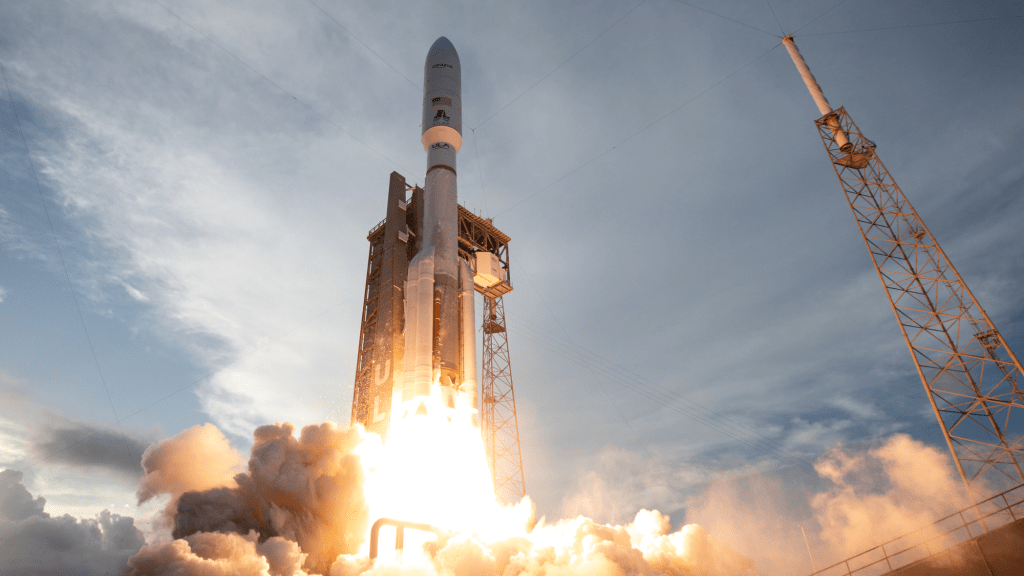
Every rocket launch begins the same way: a countdown, a burst of fire, and a deep rumble that shakes the ground. Then, suddenly, something magical happens. But have you ever wondered how that’s even possible? It’s pure science and clever engineering
Thrust and Newton’s Third Law
Rockets move thanks to Isaac Newton’s Third Law of Motion: for every action, there’s an equal and opposite reaction.
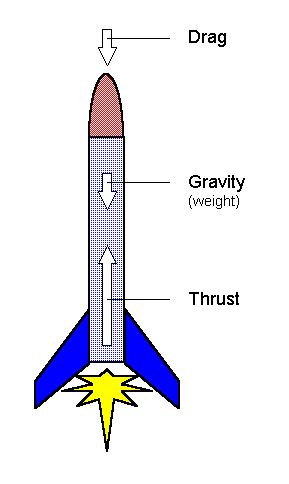
Hot gases that are released from a rocket’s engines push the rocket upward. The really hot gas that rockets release out of their engines push the air around it down, producing an equal and opposite reaction up. This is what rocket scientists (and now you) call thrust.
Beating Gravity
Earth’s gravity is really strong. It keeps me, you, and everything else on the ground (with some exceptions, like rockets!). But as long as the thrust produced by a rocket is greater than the force of gravity pulling it down (which is equal to the rocket’s mass x 9.81), the rocket will keep climbing.
To escape gravity completely, a rocket has to reach about 11.2 kilometers per second (that’s more than 25,000 miles per hour)! This speed is called escape velocity, and rockets need a lot of power and fuel to reach it.
The Role of Air Resistance
At the start of its flight and close to the ground, the rocket has to push through really thick air that slows it down. This is called drag, and as the rocket gets higher and the air gets thinner, it decreases. That’s why rockets accelerate faster after the first minute or two of launch.
Where to learn more!
Build your own rocket – https://www.science-sparks.com/5-easy-rockets-kids-can-make/
A more visual explanation – https://www.youtube.com/watch?v=Lti6a_YYQl0

 Beginner Engineer
Leave a comment