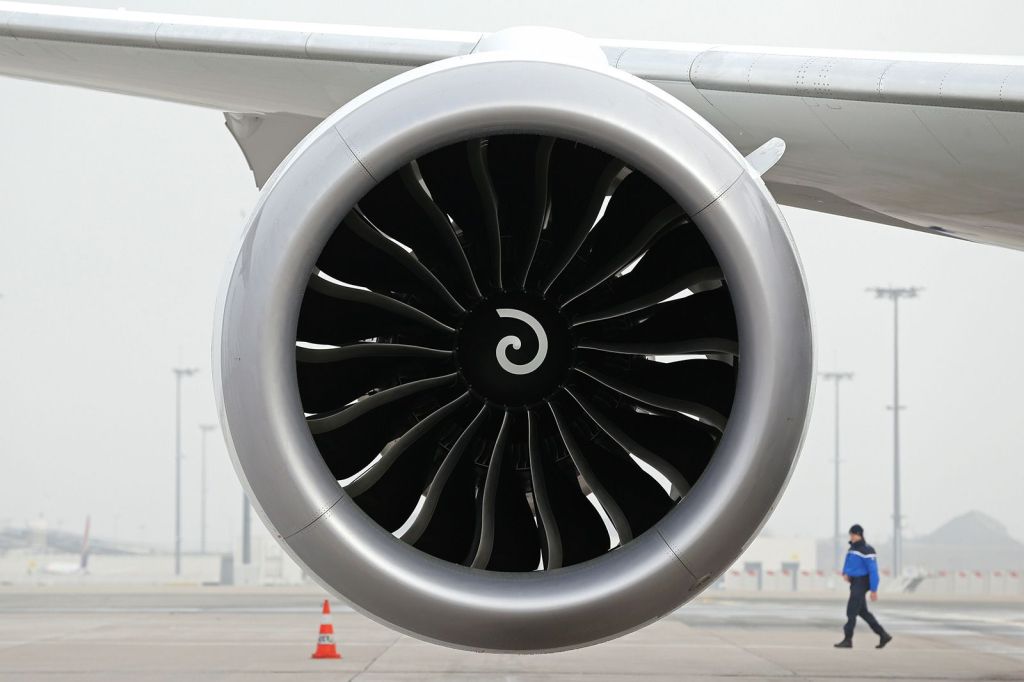
The jet engine invented in 1930 by Sir Frank Whittle has shaped the world as we know it, allowing for an unprecedented level of global connectivity, with modern airplanes operating ultra long haul flights. However, many people overestimate the complexity of the jet-engine.
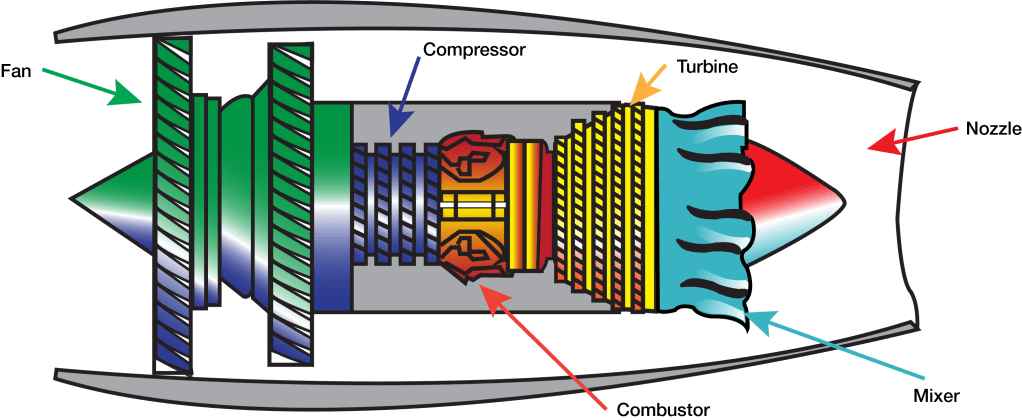
The jet engine has 4 main components: fan, compressor, combustor, turbine and a nozzle.
Fan – This is what you see when you look at front of an engine. Made up of between 16 and 34 fan blades, the fan sucks in a huge quantity of air into the engine. This air is then split and sent both to the core of the engine and to what is called the “bypass duct”. The air that is sent to the core of engine will pass through the next components of the engine. The air that was sent through the “bypass duct”, as the name suggests, bypasses the engine’s core and is sent straight to the back of the engine. The bypass air is mainly used to cool the inside of the engine and to make the engine quieter by sandwiching the hot air that comes out of the engine
Compressor – The compressor is the first part of the engine core and as you can imagine, compresses or squeezes the air. This is done using a set of spinning blades that directs the air towards smaller and smaller areas to increase the air pressure.
Combustor – This is where the air gets set on fire. The compressed air flows into a chamber where it is injected with fuel and ignited by a spark plug which creates very high temperatures, often reaching 2700°. Temperature acts as a measure of kinetic energy, and with high temperatures the air looks for a way out of the engine. With the fan still pumping immense amounts of air backwards, the hot air goes through the path of least resistance towards the turbine.
Turbine – The turbine is responsible for keeping the fan and the blades inside the compressor spinning. When the hot air comes through it spins the turbines which in turn spins a shaft that is connected to the fan and the compressor, allowing the engine to suck in more air and keep the cycle going.
Nozzle – The nozzle acts as the exhaust of the engine and allows the hot air to exit the engine and push the plane forward. Some bigger engines attach a mixer to the nozzle, which is what sandwiches the hot air with cooler “bypass air” to make the engine more silent.

 Beginner Engineer
Leave a comment