Jetpacks are the staple of 1980s sci-fi movies. Turn any of them on, and I guarantee you will see people commuting to their jobs on jetpacks. While they are not widespread, real ones do exist, and the science behind them is surprisingly straightforward.
Thrust and Newton’s Third Law
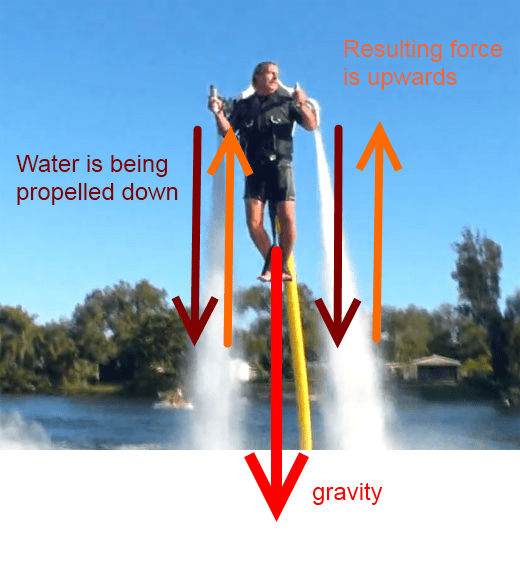
Jetpacks work because of Isaac Newton’s Third Law of Motion: for every action there is an equal and opposite reaction. When a jetpack pushes air or water down, it creates an opposite force that pushes the person and the jetpack up. It’s as simple as that!
Types of Jetpacks
There are two main types of jetpacks in use today: gas-powered and water-powered.
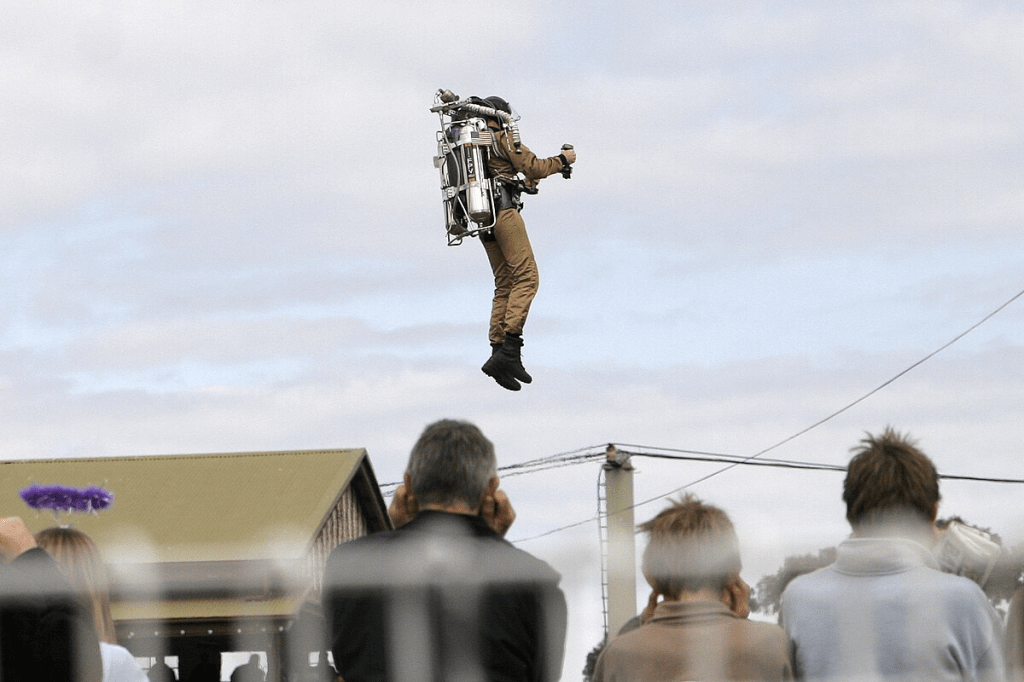
Gas-powered jetpacks burn fuel (usually jet fuel) to produce high-speed exhaust gases. Think of this like a little rocket; it works the same way! These jetpacks, or rocketpacks, can fly for up to a few minutes but are loud and hard to control.
Water jetpacks use a really powerful pump (usually on a jet ski or boat) to send water to the jetpack through a long hose. That water is then forced out of the jetpack through nozzles, creating the force that pushes the jetpack up. These jetpacks can only be used over water and are the most popular option.
Controlling Jetpacks
Controlling a jetpack in the air is not easy. Unlike airplanes, which have wings and tails to help with balance and steering, jetpacks depend mostly on the user’s body position and nozzle direction. Tilting the nozzles changes the direction of the air (or water) that is getting pushed out, which changes the flight path. Leaning forward or backwards is another way to direct the flow of air (or water).
Why Jetpacks Aren’t Everywhere
Jetpacks have been in development for almost 90 years, but they still have a lot of limitations. Their flight time is very small because of fuel, and they are very hard to fly and build. They’re just not practical for day-to-day usage.

 Beginner Engineer
Leave a comment