The engine that makes your car move is called an internal combustion engine. This is because the engine works basically through controlled mini-explosions inside the structure that generate power.
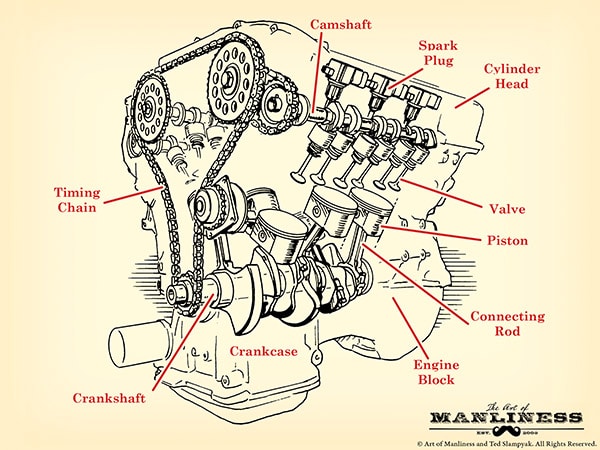
To understand how an engine works, we must first understand what makes up the engine. Simplistically, a car’s engine is made up of 4 essentials structures:
The combustion chamber: This is the place in which fuel and oxygen meet and undergo chemical reactions to generate power.
The cylinder head: Positioned right on top of the combustion chamber, the cylinder head is home to intake and outtake valves, the spark plugs, and the fuel injectors.
The pistons: The most essential part of the engine. This is what moves after the fuel and oxygen reaction to generate power.
The crankshaft/camshafts: Both structures are connected to the pistons and responsible for distributing power (kinetic energy) throughout the car, mainly moving the car’s wheels.
With this knowledge, we can now dive into how an engine actual generates the power that moves its wheels.
Four Stroke Combustion Cycle
Almost every car engine operates within a four stroke combustion cycle, meaning that the piston undergoes basically 4 steps to generate power, called strokes.
Intake stroke
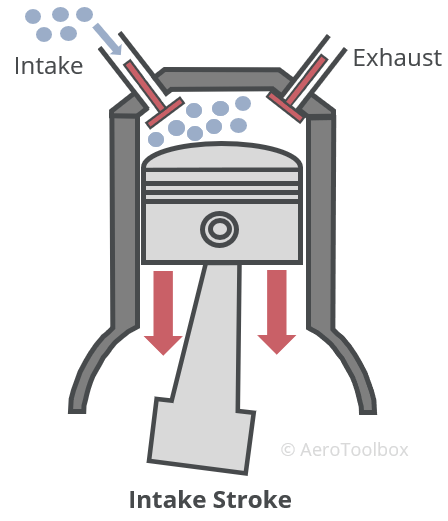
The intake stroke is the first step in the reaction. In this step, the intake valve opens and allow the oxygen and fuel to flow into the combustion chamber, pushing the piston down as the volume increases.
Compression stroke
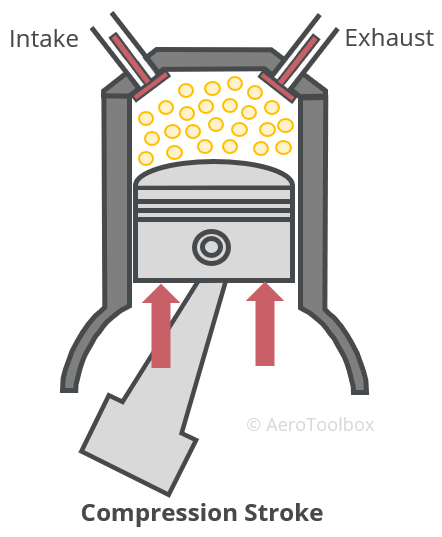
During the compression stroke, the piston moves back up to compress the mixture. As there is an inverse relationship between pressure and volume, as volume decreases pressure will increase. This compression will make the explosion more powerful.
Combustion stroke
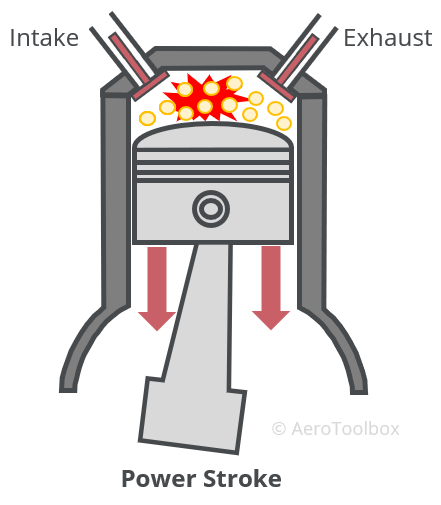
In the combustion stroke, the spark plugs ignite and set the compressed oxygen/fuel mixture on fire, which rapidly pushes the piston down. It is in this stage that power is generated, and as the piston is pushed down it spins both the crankshaft and the camshaft.
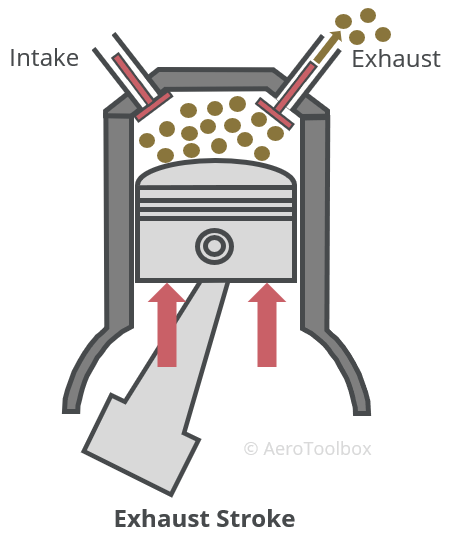
Exhaust stroke
During the exhaust stroke, the exhaust valve opens and the piston initially moves up, pushing the mixture out of the combustion chamber, but eventually starts moving down so that the cycle can start once again.

 Beginner Engineer
Leave a comment