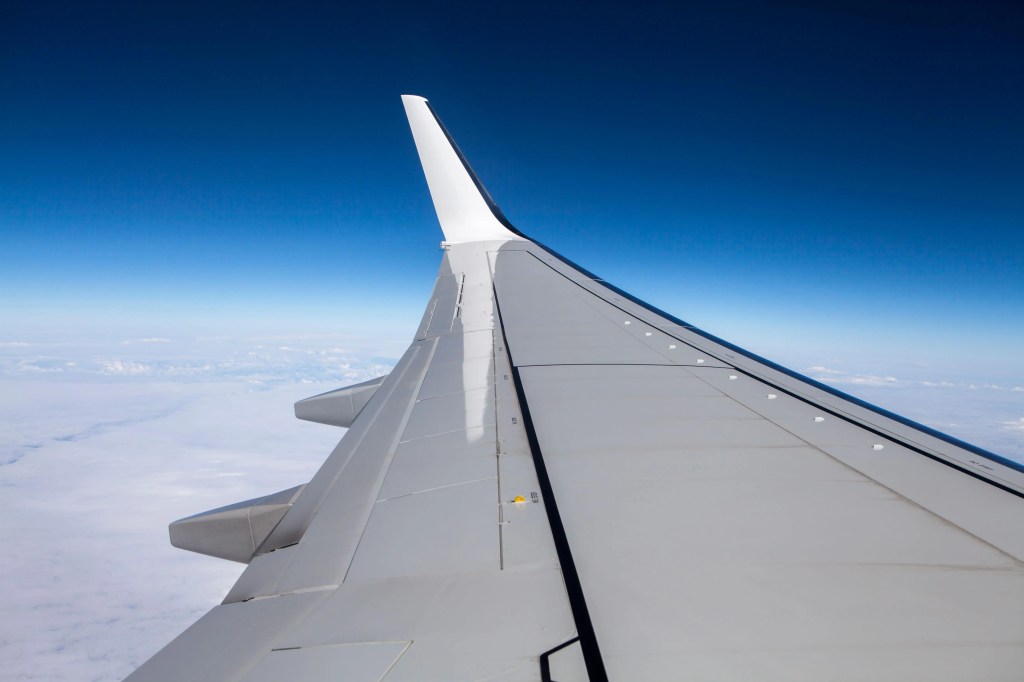
Wings are the basis for any flying machine, be it a glider, an airliner or a flying lawnmower (yes, this is a thing). But how do these airfoils allow planes that weigh thousands of tons to defy gravity and fly?
Well, there are two very common explanations.
Bernoulli’s theorem
Swiss mathematician Daniel Bernoulli explained in the late 18th century that the curved upper surface of the wing was responsible for generating lift. This is because the curved surface makes the air move faster, decreasing the pressure and creating an area of low pressure on top of the wing. The air that moves below the wing is going slower, creating an area of high pressure below the wing. These two forces create lift.
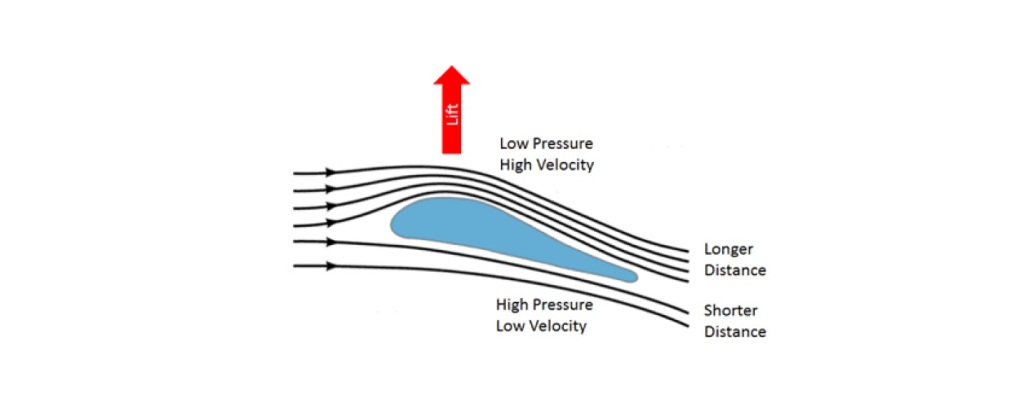
One problem with Bernoulli’s explanation is that it does not account for inverted flight, when a plane flies upside with the area of low pressure being below the wing. This is when the second explanation comes in, Newton’s Third Law.
Newton’s Third Law
Newton’s third law states that when an object is pushed in one direction, there is always a resistance of the same size in the opposite direction. This means that when air hits the bottom of the wings and rebounds downwards, an equal force pushes the wing up. This equal force is lift.
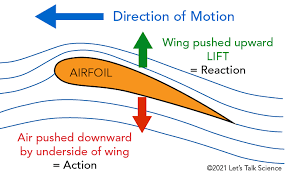
One of the advantages of Newton’s explanation is that it explains how planes fly upside down and how square (not curved) wings work. Newton, however, does not account or explain the area of low pressure that is created on top of the wing.

 Beginner Engineer
Leave a comment